
No Photographer? No Problem. Here Is How to Shoot Cosplay Solo
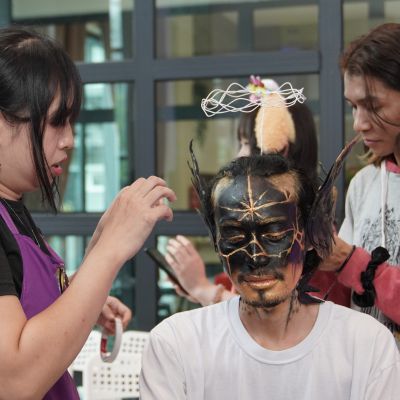
No Photographer? No Problem. Here Is How to Shoot Cosplay Solo
Solo cosplay photography is a learnable skill. With a tripod, a remote camera app, and a prepared concept, you can produce professional results without a photographer — on your own timeline, in your own creative vision.
No Photographer? No Problem. Here Is How to Shoot Cosplay Solo
Let us be honest about something that does not get said enough in the cosplay community.
Not everyone has a photographer on speed dial. Not everyone lives near a group of creatives who are free on the same weekend. Not everyone can afford to book a professional shoot every time they finish a build. And waiting for the perfect conditions to document your work means a lot of beautiful cosplays never get photographed at all.
Solo cosplay photography is a real skill, a genuinely learnable one, and the results when you get it right are completely indistinguishable from a two-person shoot. The gap between having a photographer and not having one has been closing for years as camera technology and remote control tools have improved. What used to require a crew can now be pulled off in a garage with a tripod and a smartphone.
Here is how to actually do it.
Your Camera Does Not Need to Be in Your Hands
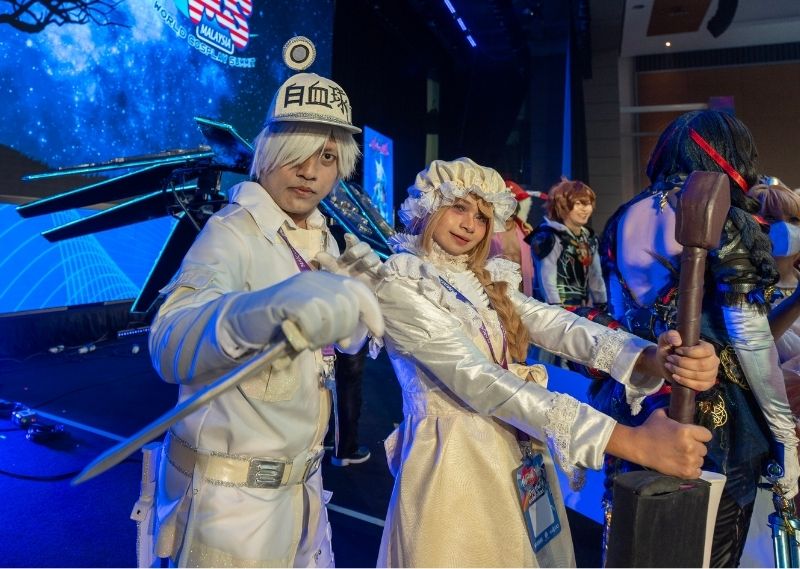
The single most important technical shift in solo photography is understanding that your camera and your body do not need to be in the same place at the same time.
Most modern cameras, whether you shoot on Nikon, Canon, Sony, or another major brand, have companion apps that allow you to view your live feed and trigger the shutter remotely from a phone or tablet. Nikon has SnapBridge. Canon has Camera Connect. Sony has their own equivalent. These apps turn your phone or tablet into a remote viewfinder, which means you can set up your camera on a tripod, walk into frame, check your composition on the screen in your hand, adjust your position, and take the shot without ever touching the camera body.
A tablet works better than a phone for this purely because the larger screen makes it easier to see what you are composing while you are mid-pose. A phone works fine if a tablet is not available. The principle is the same either way.
Set up. Connect. Walk in. Shoot. Review on the screen. Adjust. Shoot again.
Build the Concept Before You Build the Set
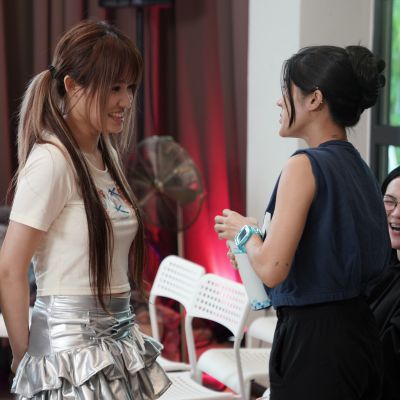
Here is where most solo shoots go wrong before they even begin. The camera is on the tripod. The costume is on. The lighting is roughly in place. And then the cosplayer stands in frame and has absolutely no idea what to do with their body.
Awkwardness in solo photography almost never comes from inexperience. It comes from having no mental framework for the shoot going in.
The preparation that makes a solo shoot work happens before any of the technical setup begins. Build a moodboard for the character you are shooting. Not just reference photos of the character itself, but the emotional tone of the world they live in. The colour palette. The energy. Dramatic and intense, or soft and melancholic, or fierce and confrontational. Each of those demands a completely different physical presence in front of the camera.
Build a playlist to go alongside the moodboard. Music is one of the fastest ways to shift your physical state during a shoot because your body responds to sound without you having to consciously tell it to.
Keep a reference folder of poses and expressions that suit the character. Not necessarily poses you plan to recreate exactly, but visual anchors that give you something to move toward when you are mid-shoot and your brain goes blank. Having ten reference images loaded on your phone means you never lose momentum because you ran out of ideas.
Lighting Is the Skill That Changes Everything
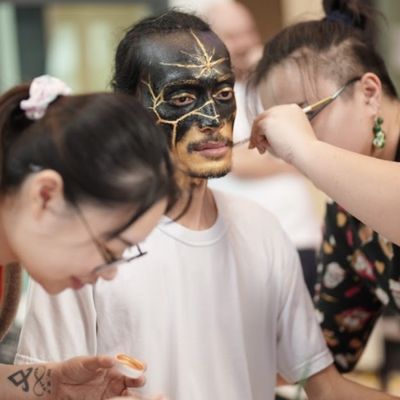
The most common assumption people make about solo cosplay photography is that you need expensive equipment to get professional-looking results. The camera body matters less than most people think. The lens matters more. And lighting matters more than both of them combined.
A portrait shot in flat, uncontrolled light with a high-end camera will look less professional than the same shot taken with a basic camera under well-controlled, intentional lighting. Light shapes the image. It creates depth. It separates the subject from the background. It determines whether a costume looks like a costume or like a character.
The encouraging truth is that good lighting does not require a significant investment. Basic speedlights available for modest prices can be positioned, angled, and modified to produce genuinely excellent results. A simple two-light setup in a small space gives you enough control to produce portraits that look considered and intentional.
Learning how light behaves, how it falls off with distance, how it wraps around subjects differently depending on the size of the source, how background separation changes with the placement of your lights, is a skill that compounds over time. Every shoot teaches you something. The gear is just the tool. The understanding of light is what actually produces the image.
Start in a controlled environment where you can learn how your lights behave without fighting other variables. A garage. A spare room. Anywhere with walls you can bounce light off and a background you can control. Once you understand how your setup works in a familiar space, taking it into new locations becomes a much smaller creative leap.
The Part Nobody Mentions
Solo cosplay photography is not just a workaround for not having a photographer. For a lot of cosplayers, it becomes the preferred way to shoot.
When you control the entire process, you control the creative vision completely. The angle. The timing. The expression. The mood. When a shot is not working, you know immediately why and you fix it immediately. There is no miscommunication between what you want and what the camera is capturing because you are making both decisions simultaneously.
The learning curve is real. The first few solo sessions will be slower and more frustrating than shooting with another person. That is normal. Every skill has an awkward early phase before it becomes intuitive.
What comes after that phase is creative independence. The ability to photograph your work on your timeline, in your vision, without depending on someone else’s availability or creative interpretation.
In a community where building and creating is already done largely alone, photography does not have to be the exception.
The camera is on the tripod. The app is connected. The moodboard is loaded.
You already know what your character looks like. Go find out what they look like through a lens.
About the Author
Katz Sharky
I've been knee-deep in foam, fabric, and fandom longer than I care to admit. I write about cosplay the way I live it — with strong opinions, genuine care, and an embarrassing amount of enthusiasm for this passion done right.
Visit me at www.facebook.com/SaltedEggKatz